
Invasive plants to devastate annual wildebeest migration
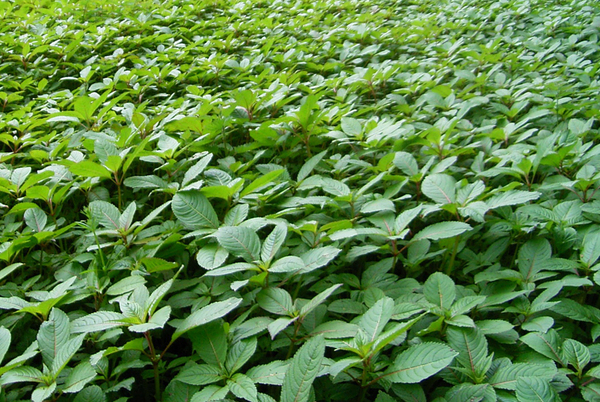
According to new research, scientists found that a number of invasive alien plant species initially introduced as ornamental plants at tourism facilities are now spreading rapidly throughout the Serengeti-Mara ecosystem, posing a major threat to wildlife, including the annual wildebeest and zebra migration as well as a range of other plant and animal species.
Kenya gets new production facility to control crop pest
By Sam Otieno. Reblogged from SciDevNet A facility has been launched in Kenya to aid commercial production of a protein bait to control fruit flies in Sub-Saharan Africa. The US$250,000 facility, which resulted from public-private partnership involving the International Centre of Insect Physiology and Ecology (icipe) and Kenya Biologics Ltd, will enable smallholders control fruit flies that devastate their fruits…
Five invasive pests cost African smallholders $1 billion every year
New research by CABI reveals that just five invasive alien species are causing US$0.9 – 1.1 billion in economic losses to smallholder farmers across six eastern African countries each year, equating to 1.8% – 2.2% of total agricultural GDP for the region. These losses are expected to grow to $1.0 – 1.2 billion per year…
Highlighting forests’ vulnerability to invasive species
After habitat destruction, invasive alien species are the second biggest threat to biodiversity worldwide. It has a significant impact on livelihoods and the economy, incurring losses of USD$1.4 trillion a year. Prior to 2012 many South-East Asian countries lacked the policies and information on the presence, distribution and impact of invasive species to properly manage this…
The locust invasions devastating Niger
It is the end of December 2016, with clear skies over Niger. But as 2017 draws near prospects are grim for some 500 residents in Bani Kosseye, a village 80km from the capital Niamey. Agricultural production has been poor here, and families’ meagre stocks are expected to run out within a few weeks. People already fear…
Alien species on the rise worldwide
New research shows rates of alien species’ introduction are higher than ever. The increase in numbers of alien species does not show any sign of saturation at a global level, an international team of 45 researchers led by scientists from Senckenberg, Germany, and University of Vienna, Austria, has discovered. CABI’s Dr Marc Kenis, based in…
Taming ornamental plant invasion in Kenya
In this video, scientists and local people explain the dangers of Opuntia stricta, an invasive cactus weed covering large tracts of land in Kenya’s semi-arid Laikipia County, and efforts in place to tame its spread and adverse impacts.
Scientists discover new crop-destroying Armyworm is now “spreading rapidly” in Africa
New research announced today by scientists at CABI confirms that a recently introduced crop-destroying armyworm caterpillar is now spreading rapidly across Mainland Africa and could spread to tropical Asia and the Mediterranean in the next few years, becoming a major threat to agricultural trade worldwide.
CABI’s new biocontrol video
CABI has produced a new video which focuses on how we are using biological control, or biocontrol, to manage some of the worst invasive species that are affecting farmers’ livelihoods.
My UK adventure
By Fernadis (Feddy) Makale, MRes, CABI It all started with a single application email after coincidentally stumbling on a scholarship ad online. Landing in the UK at almost sub-zero temperatures I didn’t know what was ahead of me. I had successfully won a scholarship for a Research Masters (MRes) degree co-funded by CABI and…