
A fifth of the world’s plants under threat, as report says 391,000 species now known to science
Dave Simpson – 11 May 2016 A ground-breaking report from the Royal Botanic Gardens, Kew, has produced an estimate of the number of plants known to science. By searching through existing databases, the researchers have estimated that there are now 390,900 known plant species, of which around 369,400 are flowering plants. But this figure is…
Malaria incidence and invasive plants – is there a link?
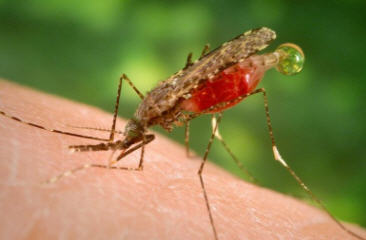
3.2 billion people are still at risk of getting malaria. Although progress has been made, if we are to achieve a 90% reduction in global malaria incidence and mortality by 2030 we must do more. Controlling invasive species may be part of the solution. The path will not be easy. Mosquitoes are becoming increasingly resistant…
New Strategy Receives Thumbs Up
This week in Douala, Cameroon, the General Assembly of the African Union’s InterAfrican Phytosanitary Council (IAPSC) gave the thumbs up to IAPSC’s new strategic plan. IAPSC Director Dr Jean Gerard Mezui M’Ella thanked all the organisation’s partners who had assisted in the preparation of the plan, especially FAO’s Regional Office for Africa for funding the…
Villagers front-line in the battle against Prosopis in Ethiopia
Paul Rogers, Business Development Manager at CABI, visits Badahamu to understand how invasive weeds affect their livelihoods As we arrived in Badahamu, in eastern Ethiopia, negotiating the by-now familiar thickets of Hara Dergi, “Derg weed” as Prosopis is known in the local Afar language, the impact of last autumn’s floods were painfully apparent. We passed…
Ebola and IAS
A conversation with Dr Arne Witt The recent outbreak of Ebola virus disease in West Africa made headline news around the world. During the outbreak this fatal disease, endemic to parts of Central and West Africa, rapidly spread from Guinea, Sierra Leone, and Liberia to other countries in the region such as Nigeria, Mali and…
In the eye of the invasive species storm
17th September 2014 – Last weekend I experienced first-hand the impacts that invasive species can have. While carrying out research on an infestation of Opuntia Stricta in Laikipia, I felt something lodge itself in my eye. The following day I visited a specialist, as efforts to wash the thorn out of my eye had been…
CABI releases rust fungus to control invasive weed, Himalayan balsam
26 August 2014 – From today, not-for-profit research organization, CABI, will be releasing a rust fungus at locations in Berkshire, Cornwall and Middlesex as part of field trials to control the non-native, invasive weed Himalayan balsam (Impatiens glandulifera) using natural means. Himalayan balsam has rapidly become one of the UK’s most widespread invasive weeds, colonizing…
Getting swamped: Australian swamp stonecrop (Crassula helmsii) in the UK
In January this year, large parts of southern Australia were ablaze with fierce bush fires, while most of the UK was covered in snow. Half a world away from each other, and at one point nearly 40ºC apart, there aren’t too many similarities to be drawn between the two locations. And yet, there is a…
Asian longhorn beetle – A clear case for early eradication
It was confirmed last month that the first population of the forestry pest, the Asian longhorn beetle (ALB), was found in Kent, UK. Forest Research scientists discovered this damaging native of Japan and China infesting around 20 trees, and are now surveying the area to find out the full extent of the infestation. The establishment…
Lantana – a battle not yet over!
I’m really pleased to see a more sensible discussion going on about the realities of invasive species management thanks to the article in Invasive plant News which involved one of our regional Coordinators for Invasives Arne Witt from our CABI Africa Centre. The crux of the issue was the naïve use of the word eradication…