
New in February 2015 from the ISC
In February 2015 the following datasheets were published on CABI’s Invasive Species Compendium (ISC). You can explore the open-access ISC here: www.cabi.org/isc Furcraea foetida (Mauritius hemp) – native to Central America, this evergreen perennial has been introduced worldwide as an ornamental, for its fibre and for erosion control. However, F. foetida can grow up to three metres…
New in January 2015 from the ISC
In January 2015 the following datasheets were published on CABI’s Invasive Species Compendium (ISC). You can explore the open-access ISC here: www.cabi.org/isc. Clerodendrum thomsoniae (bleeding glory bower) – native to West Africa, this vine has been widely cultivated in tropics and subtropics worldwide, and is naturalised in many places, including the USA, Australia and the Galapagos Islands.…
Himalayan Balsam and its impact on UK invertebrates
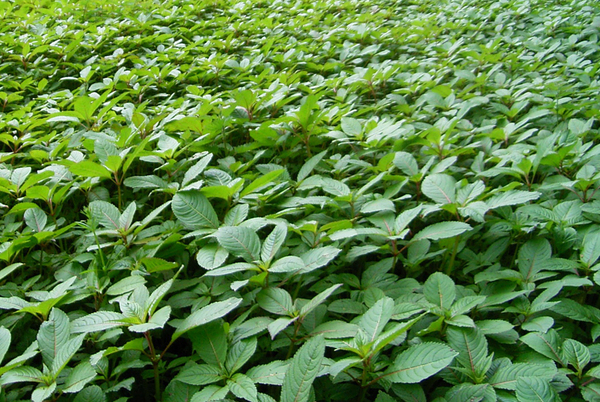
Himalayan balsam is one of the UK’s most widespread invasive weed species, colonising river banks, wasteland, damp woodlands, roadways and railways. Research by CABI scientists has shown local invertebrate biodiversity is negatively affected by the presence of Himalayan balsam. This leads to fragmented, destabilised ecosystems, which has serious consequences on processes and functioning, and complicates…
The value of costing nature in the fight against invasive species
Increasingly we are seeing the terms ‘ecosystem services’, ‘ecosystem functioning’ and ‘ecosystem processes’ in the media and the scientific literature, to highlight the benefits the natural environment provides to our wellbeing. Invasive species, from bivalves to balsams, have the potential to impact on ecosystem services, though it is widely accepted that there are gaps in…
Our rivers – corridors for colonisation
Our river systems are undoubtedly one of the most diverse habitats found within the British Isles. They provide us with numerous benefits including areas for relaxation and recreation, they harbour high levels of biological diversity, act as natural flood management, provide water for consumption and irrigation, and act as corridors for the movement of nutrients…
Latest GISP publications on invasive species
The Global Invasive Species Programme (GISP) has recently published two publications on invasive species, Mainstreaming Gender into Prevention and Management of Invasive Species, and Invasive Species, Climate Change and Ecosystem-Based Adaption: Addressing Multiple Drivers of Global Change, both of which deserve a read. Both publications can be downloaded via the GISP website
Can biocontrol bash the balsam?
After a long hot summer, many custodians of the countryside will be breathing a sigh of relief as the winter months will provide a rest bite from battling with infestations of non-native plant species. Unfortunately, the battle is too often one sided and the weeds are winning! Himalayan balsam (Impatiens glandulifera) is one of the UK’s…
Natural Born Killers
Last month anglers at Grafham Water reservoir in Cambridgeshire, UK spotted the invasive killer shrimp Dikerogammarus villosus. The first sighting of this ferocious little beast in the UK has instigated the GB Non Native Species Secretariat (NNSS) to issue a species alert as part of the GB rapid response protocol in an attempt to contain…
- « Previous
- 1
- …
- 4
- 5
- 6